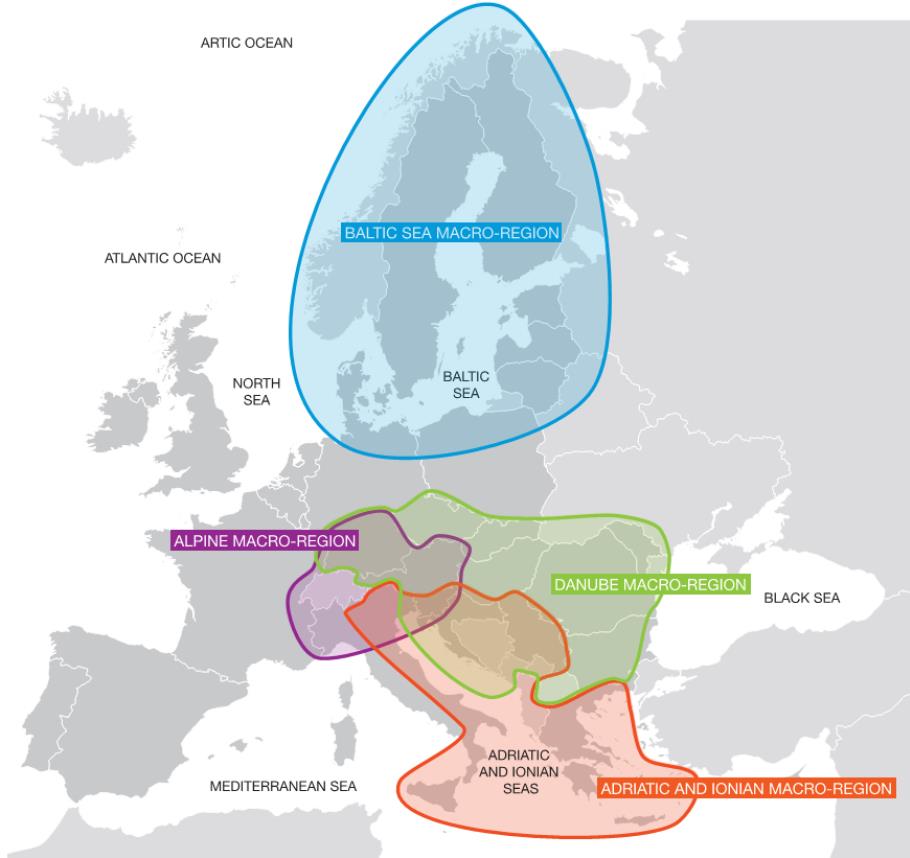
On 16 September 2025, the Council of the European Union adopted conclusions on the fifth Report of the European Commission on the implementation of EU macro-regional strategies. The Council acknowledged the important role of these strategies in strengthening cooperation, trust, preparedness and resilience, and invited participating countries to reinforce their political leadership and ownership.
Welcoming the Commission’s report, the Council underlined the increasing relevance of macro-regional strategies in today’s complex geopolitical and environmental context. It commended the updated Action Plan for the Adriatic and Ionian Region, which now includes a new social pillar and recognises EU enlargement as a cross-cutting priority – an important step towards integrating candidate countries more closely into EU processes.
The Council stressed the need for strategies to remain flexible and responsive to emerging challenges such as demographic change, the energy transition and economic competitiveness. It encouraged participating countries to demonstrate stronger political commitment and to adapt their action plans accordingly.
A key highlight was the recognition of macro-regional strategies as platforms for mutual learning and cooperation between EU and non-EU countries. Candidate countries, in particular, can engage on equal terms with Member States, gaining practical experience in EU policy implementation and capacity-building. This approach supports the enlargement process and helps to bridge the gap between local initiatives and wider EU objectives.
The Council further recognised the contribution of these strategies to advancing green, digital and fair transitions. It called for continued efforts to embed their priorities into EU funding programmes, especially through INTERREG, and welcomed progress in developing monitoring and evaluation systems.
It also encouraged concrete steps to actively involve civil society organisations, local communities, youth, academia and businesses in the strategies’ implementation. In this regard, the Council expressed strong support for macro-regional youth structures, acknowledging their role in shaping forward-looking policies and strengthening grassroots engagement.
Finally, the Council urged the Commission to maintain high-level political support and to enhance strategic communication to raise public awareness of the strategies’ impact. Looking ahead, macro-regional strategies will continue to play a vital role in fostering inclusive, sustainable and resilient regions. The next progress review is expected by the end of 2027, providing an opportunity to assess achievements and set new priorities.
