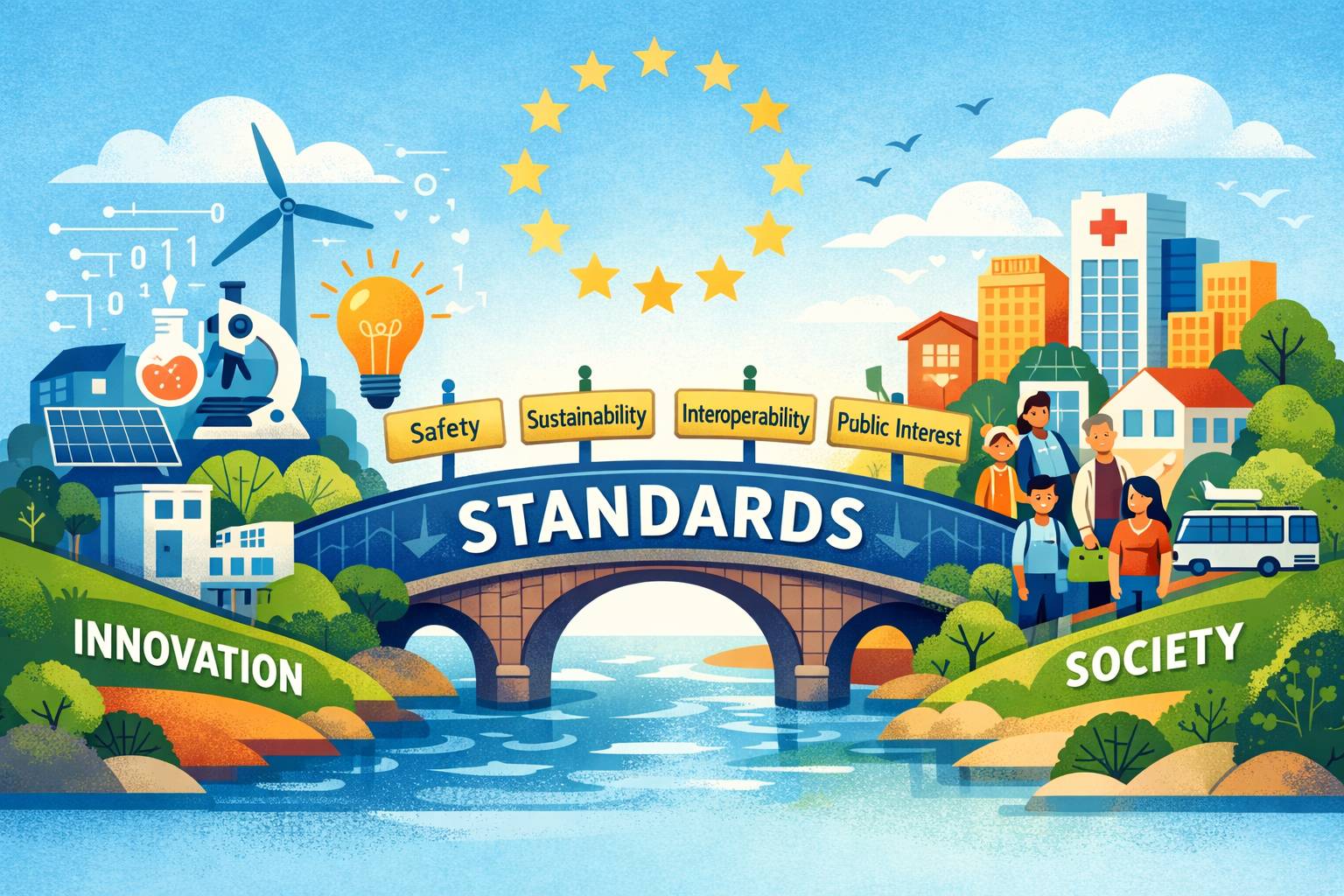
On 1 December 2025, the European Commission launched the second edition of the European Standardisation Panel Survey. At first glance, standardisation may appear to be a technical or industry-focused topic. In reality, it plays a decisive role in shaping how innovation develops, who benefits from it, and whether new technologies serve the public interest.
Standards shape society, not just markets
Standards underpin almost every aspect of modern life. They determine how technologies interact, how safe products are, how data is shared, and how quickly innovations move from laboratories into everyday use. In emerging fields such as digital technologies, clean energy, health, and advanced manufacturing, standards can either accelerate progress or lock in narrow commercial interests.
When standards are designed with only a limited set of voices at the table, they risk prioritising short-term market efficiency over long-term societal value. Inclusive and well-designed standards, by contrast, can support sustainability, accessibility, safety, and consumer trust. This is why the standardisation agenda matters well beyond industry and why civil society perspectives are essential.
What the survey is about
The European Standardisation Panel Survey collects direct input from stakeholders on where standards are missing, outdated, or poorly aligned with innovation needs. It is open to a wide range of actors, including researchers, innovators, SMEs, start-ups, patent holders and organisations involved in research and innovation ecosystems.
The results will feed into future EU standardisation priorities (EU Standardisation Strategy) and help guide policy decisions under the EU’s broader research, innovation and industrial strategies. The previous edition of the survey already revealed a significant unmet demand for standards from industry. The second edition now offers a chance to deepen that picture – and to broaden it.
Why civil society voices matter
Civil society organisations bring perspectives that are often under-represented in standardisation processes: social impact, environmental sustainability, public interest safeguards, human rights, and inclusivity. These considerations are especially important in areas such as digitalisation, artificial intelligence, green technologies and health innovation, where standards can have profound societal consequences.
Engaging with the survey allows civil society actors to highlight where existing standards may create barriers for smaller players, reinforce inequalities, or fail to reflect societal needs. It is also an opportunity to argue for standards that actively support public policy goals, such as climate neutrality, consumer protection, open innovation and equitable access to technology.
Responses to the survey are open until 31 January 2026, with results expected to be published later in 2026.
